
Sponsored By

In Cooperation With

Gold Sponsors


Bronze Sponsors



Logo design by Michal O. Zadok.
|
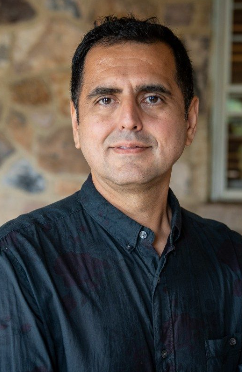
Ali R. Butt - Virginia TechTitle: Rethinking Cacheability: Storage and Caching Innovation in the AI Era Abstract: Classical caching exploits skew: some data matters more than the rest, and systems benefit from keeping the important data close. In this talk, I'll argue that AI workloads expose new ways to measure and exploit this skew, tracing a journey of ideas from my group across AI and HPC systems. Can individual training samples be made "cacheable," using their contribution to model convergence to decide what to keep and what to evict? What changes when data and compute are distributed across heterogeneous clients, as in federated learning, and when much of that system's cost lives outside the training loop itself? At LLM scale, what happens when the unit being cached is a tensor moving across GPU memory, host memory, and storage? I'll then connect this thread back to HPC, where I/O behavior can be predicted from historical logs and agentic AI can diagnose bottlenecks directly from system traces. Across these systems, the same underlying idea emerges: understanding what matters—whether data, tokens, activations, or I/O behavior—can enable systems to make better decisions about where to spend scarce resources. I'll close with open questions about how far this importance-driven approach can be pushed as models, training regimes, and hardware hierarchies continue to evolve. Bio: Ali R. Butt is a Professor of Computer Science (and ECE by courtesy) at Virginia Tech, where he leads the Distributed Systems and Storage Laboratory (DSSL) and directs the stack@cs Center for Computer Systems. His research spans cloud and high-performance computing systems, systems support for machine and deep learning applications, and file/I/O/storage systems. He is an ACM Distinguished Member and a recipient of an NSF CAREER Award and NetApp & IBM Faculty Awards. He serves as Associate Editor for ACM Transactions on Storage, and has served as General Chair for ACM HPDC 2023 and PC Co-Chair for USENIX FAST 2028. Outside of research, Ali loves to travel, explore new places, and experience the world through its food, cultures, and people. |